When a Great Nation Begins to Die
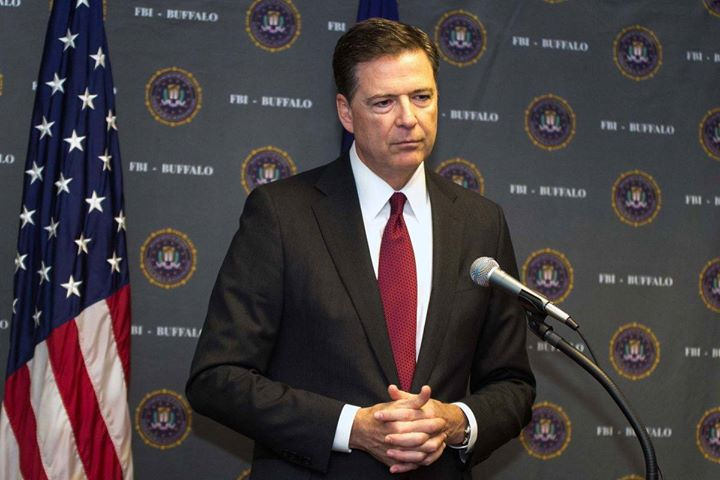
The rule of law which guarantees our core freedoms is under siege…by the un-American statists and their agents, men like Comey.
The rule of law which guarantees our core freedoms is under siege…by the un-American statists and their agents, men like Comey.
On March 5, North Korea simultaneously launched four missiles into Japan’s territorial waters. In his new year’s address, the North’s supreme leader, Kim Jong Un, bragged that his nuclear-armed rogue state would soon be testing an intercontinental ballistic missile capable of reaching the US. A day later, President Trump tweeted in response, “It won’t happen!” [...]
The historian and theologian, Father Richard Neuhaus, opined that the difficulty for today’s Muslims is that Mohammad is the only founder of a major modern religion whose life falls within an era of pedigreed historical inquiry. Islam’s spectacular spread was brought about by brutal military conquest, rapine, spoliation, and slavery. Its culture was derived from [...]
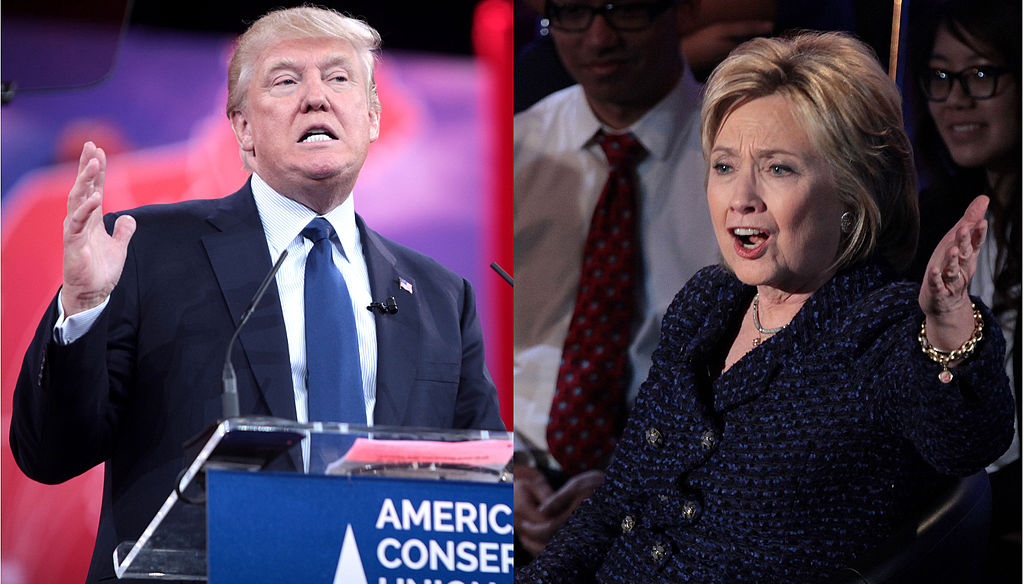
(First in a series on National Security and the 2016 presidential election) On the same day, September 27, 2016, nine days before the first presidential debate between Clinton and Trump, a Somali American, Dahir Adan, stabbed nine people in a Minneapolis mall and an Afghan American, Ahmad Rahami detonated a pressure-cooker bomb in the heart [...]
Declining civilizations will always face superior firepower from ascending civilizations because sovereignty is only temporarily uncontested. In the First Punic War, during the late 240s BC, the Carthaginians grew weary of the long war with Rome and made the decision to decommission much of their fleet and to release from their employ many of their [...]
When a civilization accepts the propaganda of its enemy as truth, it has reached the far side of appeasement and capitulation is nigh. In 340 BC the Athenian ambassadors to Macedon, who had negotiated the Peace of Philocrates, returned to Athens and addressed the Assembly. They extolled the virtues and peaceful intentions of the warlord [...]
Debasing the currency always destabilizes the governing authority. During the late second century and early third centuries AD several Roman Emperors attempted to inflate the Empire’s wealth. They recalled some of the outstanding gold coinage, secretly melted it down, and reissued it with leaden cores. In each case, this tactic was nearly catastrophic. The secret [...]
With the loss of fiscal solvency comes a loss of sovereignty. After the fall of the Roman Empire of the West in AD 476, the Emperor Justinian came to power in Constantinople, the capital of the still existent Roman Empire of the East. With the help of some able generals, Justinian was able to reclaim [...]
To hold territory, a state must be populated by those loyal to the central authority. When immigration overwhelms assimilation, the fall is predicted. In the summer of 376 AD, the Roman Emperor, Valens, agreed to allow a very large tribe of Goths to settle in Thrace. He could not have imagined that this decision would [...]
When a free people, through taxation, is deprived of its ability to acquire wealth and property, collapse is presaged. Crushing taxation imposed upon the middle and lower class Romans contributed to the loss of the Roman provinces of Gaul, Iberia, and North Africa to the German invaders of the fifth century. In the second and [...]